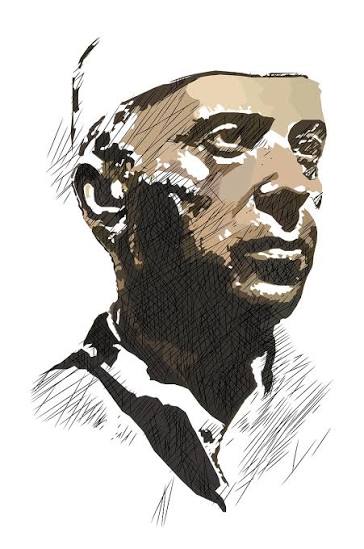
I have recently seen a meme that Britishers are asking Nehru what will you do now post-independence about India and Nehru is simply saying – “rebuild it ” just like way it was, Brick by brick and in that moment it really stuck me that yes the foundation of today’s Indian has laid after 1947 but if you look back in history, when we got independence things were not even were bad, they were worst and then came the leader who not only envisioned India but made us belief that we can proudly say that yes we are a proud citizen of the best country of the world.
The Beginning: A Barely Existent Nation
Imagine August 1947, when the worst mass migration and intercommunal bloodshed in history had just split India in two. There are about 400 million people, the most of whom are hungry, malnourished, and illiterate. The average lifespan was thirty-two years. The British had constructed railroads to transport completed textile in and raw cotton out, not to construct a nation, thus there was hardly any industrial basis worthy of the name. The nation was broken, no atomic program, no space program, no infrastructure for higher scientific education, and no steel industry at all.
Partition has just happened the treasury was literally empty. Assets, debts, and administrative equipment had been divided equally by partition. Nehru did not inherit a state that was in operation. He inherited the potential for one and had to construct the remainder from the ground up while keeping a country together that many, including some members of the British elite, honestly thought would fall apart in ten years.
The Vision: Four Pillars
Nehru’s vision and conviction based on these four constructive pillars:
1. Democracy, not a strongman state – Nehru insisted on universal adult suffrage, a free press, and an independent judiciary at a time when a “benevolent dictatorship” would have been the simpler course of action, which many recently independent nations selected. Over 173 million people cast ballots in India’s first general election in 1951–52, the majority of them were illiterate. At the time, even several Western democracies limited voting based on property or literacy. Everything that followed was shaped solely by that choice.
2. Scientific Temper – According to Nehru, a poor nation cannot afford to be a backward nation. He created the term “scientific temper” and instilled it in Indians as a civic virtue rather than only an academic one.
3. Planning for self-reliance – He thought that India could not continue to be a raw material provider to wealthier countries. He advocated for India to develop its own heavy industries instead of continuing to rely on imports through the Five-Year Plans.
4. Non-Alignment – Nehru insisted that India set its own foreign policy during the Cold War and co-founded the Non-Aligned Movement instead of becoming a client state of the US or the USSR.
The Accomplishments: The “Temples of Modern India”
Nehru literally referred to the establishments and infrastructure he constructed as “temples of modern India”:
- IITs: In 1951, the first Indian Institute of Technology opened its doors in Kharagpur. Bombay, Kanpur, Madras, and Delhi followed. Nehru wanted India to produce its own engineers instead of importing them. Today, Google, Microsoft, and IBM are run by IIT grads.
- AIIMS: At a period when India was severely lacking in physicians and medical facilities, the All India Institute of Medical Sciences was founded in 1956 with the goal of building world-class medical research and teaching capabilities from the ground up.
- The Atomic Energy program: In close collaboration with Dr. Homi Bhabha, Nehru established the Atomic Energy Commission in 1948 and supported the creation of the Bhabha Atomic Research Center (formerly known as the Atomic Energy Establishment, Trombay) in 1954. This was remarkably early for a nation still in need of food, and it laid the groundwork for India’s eventual nuclear capability.
- Steel and heavy industry: Nehru referred to large-scale irrigation and dam projects like Bhakra-Nangal as the “new temples” of a modern, self-sufficient India, as well as public sector steel factories at Bhilai, Durgapur, and Rourkela.
- Institutional building: Building institutions such as the Planning Commission, the Election Commission’s early reinforcement, the IIMs (whose planning started under him), and a parliamentary bureaucracy that has been in operation for more than 70 years.
Why This Is Important Right Now
All of the calculated risks were taken with very little money people don’t think about that. Today’s generation gets AIIMS as a hospital, IITs as a brand, and a nuclear program as a strategic asset. Regardless of one’s political opinions regarding the Congress party or Nehru’s particular policy decisions, decisions made during his seventeen years as prime minister are directly responsible for the institutional framework of contemporary India, including its universities, scientific institutions, industrial base, and democratic architecture.
Conclusion: The foundation we forget
Nehru was not an ideal leader, and his choices should undoubtedly be discussed, scrutinized, and evaluated in light of the historical circumstances. India wasn’t a powerhouse just waiting to emerge in 1947. The nation was struggling to survive its early years of independence and was extremely impoverished, fragmented, and mostly uneducated. Perhaps more than any particular dam, IIT, industry, or scientific establishment, Nehru’s greatest gift was his conviction that India could construct these things on its own.
Despite inheriting a nation with many issues, he made the decision to establish institutions rather than rely on individuals, scientific aptitude rather than superstition, democratic procedures rather than dictatorial quick cuts, and self-sufficiency rather than long-term reliance.
It took time for India to become what it is today, with its scientists, engineers, physicians, industries, universities, nuclear capabilities, and democratic institutions. Perhaps the true lesson Nehru leaves behind is that a nation is not established in a single election or by a single leader. It was constructed brick by brick, generation after generation. It is constructed by laying solid foundations that can be expanded upon by subsequent generations.