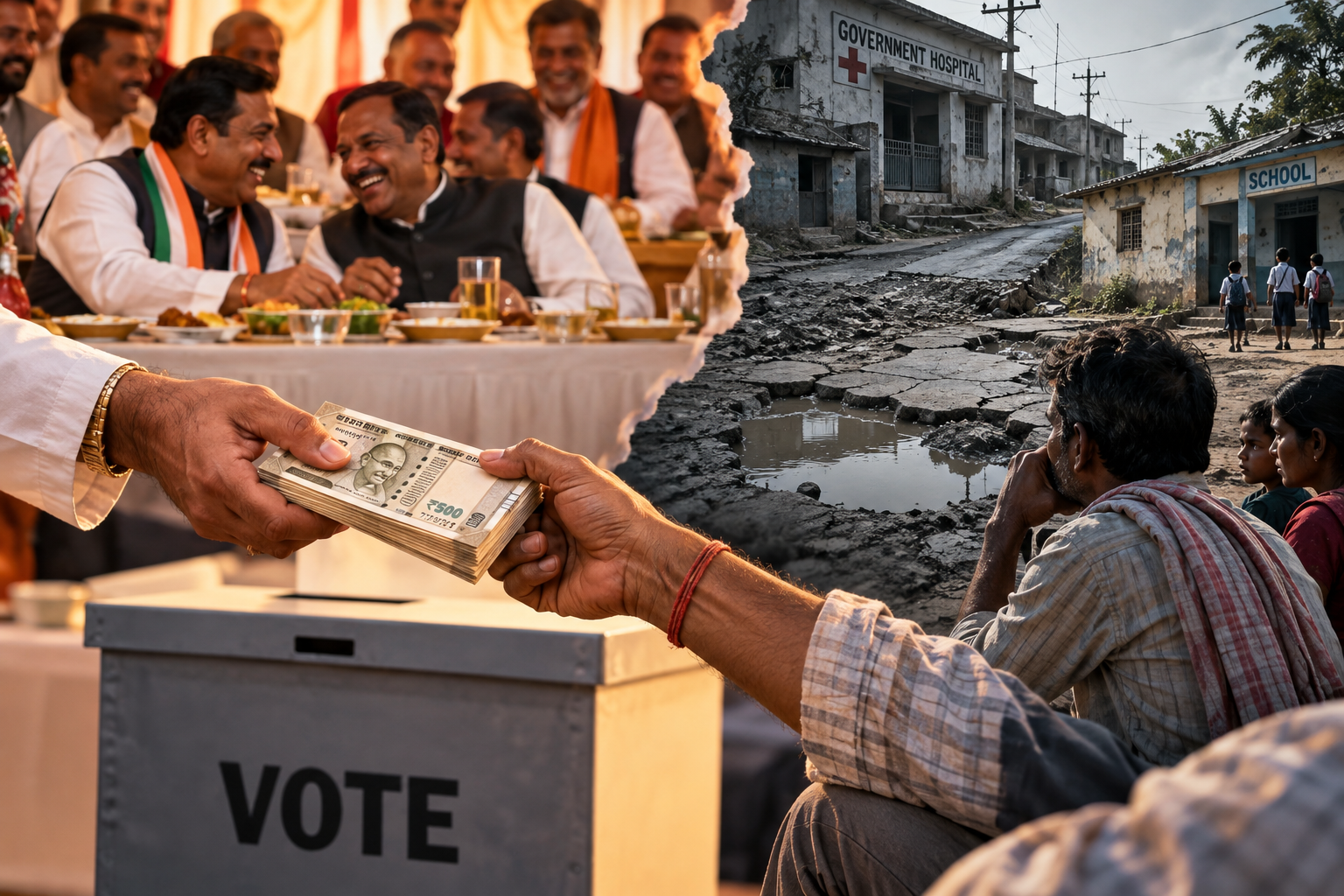
I occasionally find myself returning to a question that bothers me. Which is more dishonest, the voter who willfully sells their vote for a few thousand rupees or the politician who takes advantage of the public?
It’s simple and frequently just to blame politicians. They make a lot of promises, appear during election season, and then disappear after winning. However, many of us still vote for the same looks five years later. Are they really so skilled at deceiving us? Or have we become so accustomed to this loop that we no longer recognize our own role in it?
When caste decides
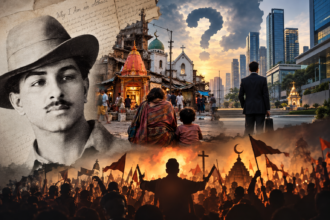
In India, caste still shapes how many people vote. Ask someone why they backed a candidate while their village still has no proper road and no jobs, and you may hear a very short answer: “He is from our community.”
But what does that give them? Does the candidate know this voter’s name? Has he done anything for their family? Not at all. ac A shared surname alone can buy loyalty.
I’m not saying anyone should feel ashamed of their caste or culture. My point is that identity shouldn’t outrank accountability. Sharing a community with someone doesn’t make them a good representative. Their job is to serve everyone who voted for them, not just people like them.
Ego also gets mixed up in this. We want “our person” to win because it feels like our own win. Later, when he disappoints us, admitting the mistake means admitting we were wrong. So we stop judging the politician and start defending our own choice.
A few thousand rupees for five years
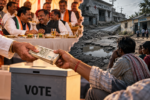
Then there is the matter of cash, liquor and gifts handed out before elections. Not every election works this way, and not every voter accepts such things. But where it happens, one question stays with me: is the short-term gain worth the long-term cost?
For a family that is struggling, a few thousand rupees is real. It might pay for groceries or an emergency, and I won’t pretend otherwise. But the money is gone in a week. The broken road, the understaffed hospital and the missing jobs are still there years later. And when that same voter needs help from the person they helped elect, what do they get?
Poverty makes these choices hard, and it would be wrong to condemn anyone without knowing their position. The bigger blame belongs to those who take advantage of that desperation. Nevertheless, a vote is more than a personal asset that may be exchanged. It is one of the few tools ordinary people have to hold power to account. Sell it, and you diminish your own right to demand better.
Leaders dine together, supporters fight
Here is something I find strange. Leaders from rival parties sit down together, share meals and chat politely. Meanwhile their followers trade abuse online and lose friends over them.
Do the leaders really feel the hatred their supporters show? Probably not always. Politics is complicated. But the contrast is hard to miss. At the top, people disagree and still cooperate. At the bottom, people burn bridges over leaders who may not know they exist.
The leader gains influence. The supporter gains anger and a few lost relationships. Disagreement is part of democracy, but blind loyalty can make neighbours into enemies. If two politicians can talk across a table, why can’t we? Maybe the honest question is whether we back someone because we believe in their work, or because their victory has become a matter of our pride.
Why do good people stay away?
Whenever corruption comes up, someone says you can’t survive in politics without getting your hands dirty. Why do we assume honesty and success can’t go together?
There are real obstacles. Elections cost money, parties need organisation, and newcomers run into entrenched interests, pressure and sometimes threats. Some honest people give up. Some compromise. A few keep going anyway.
Education isn’t the cure either. A highly educated person can be corrupt, and someone with little schooling can be honest and capable. Degrees add knowledge, not integrity.
So the issue is bigger than “good people won’t join.” It also has to do with what the system incentivizes. Politicians have every incentive to continue giving contentious speeches, easy rewards, and personal favors if voters continue to prioritize them over real work. That doesn’t excuse politicians, who remain responsible for what they do. However, it demonstrates how our decisions send signals.
So, who is more dishonest?
A politician is dishonest if they violate the public’s confidence for their own benefit. There isn’t much of a disagreement there, but what about the voter who pays to cast a ballot and then complains about the system for years?
I’m not saying every voter is equally guilty. A powerful politician who exploits people and a poor citizen who gives in under pressure are not in the same position. The main duty of keeping elections clean falls on candidates, parties and the institutions that enforce the law still, citizens have a part to play. We can ask what a candidate has actually done and whether their promises are realistic. We can question leaders from our own community as hard as we question outsiders. We can stop treating politicians as extensions of ourselves.
Above all, voting is not a favour to a person. It is a decision about who should be trusted with public responsibility.
Maybe there is no clean answer. Dishonesty comes in different sizes, and responsibility should match power. But one thing seems clear to me: we can’t demand honest leaders while excusing dishonesty whenever it suits us.
So the next time someone asks why nothing changes, maybe we should ask ourselves something more personal. Did we choose based on a candidate’s work, or did caste, ego, money and emotion choose for us?
Sometimes the real price of a vote is the future we give up for a benefit that lasts a few days.