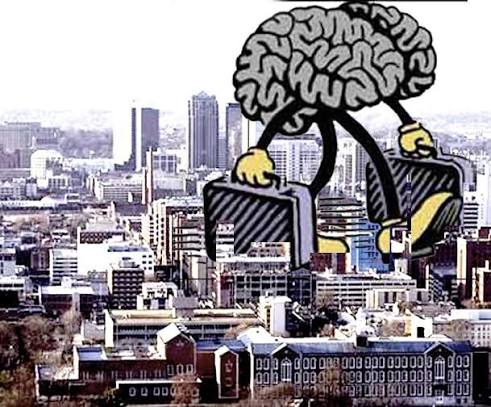
Being a teenager every child has the same dream study and moving abroad no matter what just go outside India and start living life king size and some people get lucky to go outside india for study or for work and before we board that flight, we sit for months with spreadsheets open — tuition, rent, loan EMIs, insurance, the exchange rate that decides whether our salary “makes sense.” We compare dollars to rupees like it’s a science. We plan for everything.
Except the one thing that actually breaks us.
Nobody opens a spreadsheet for this: How many of your father’s birthdays will you miss? How many Diwalis will you celebrate staring at a phone screen instead of a diya? How many times will your mother need you while you’re sitting in an office nine time zones away, unable to do anything but say “I’m sorry, I can’t come right now”?
There’s no column for that, no formula and yet, for most of us, it becomes the only number that ever really mattered.
When You’re Twenty-Two, Your Parents Feel Eternal
At twenty-two, you don’t think your parents are aging. You think they’re just… your parents. Permanent. Unchanging. Your father’s shoulders will always be broad enough to lean on. Your mother’s voice will always be there, calling you for dinner.
So you leave, telling yourself it’s temporary. “Just two years for my master’s.” “Just till I get some experience.” And then — quietly, without asking your permission — one-year folds into three. Three folds into eight. You get the promotion. The apartment upgrade. The car. Maybe the green card. Life abroad stops feeling like an experiment and starts feeling like home.
But here’s the cruelty nobody warns you about: while you are building your future, your parents are spending theirs. Their clocks don’t pause because yours is still ticking toward your dreams. You get to postpone. They don’t.
The Things a Video Call Cannot Do
We tell ourselves we’ve solved the distance. We call every evening. We send money without being asked. We book their doctor’s appointments online, order their medicines, transfer funds the moment something’s needed. Technology has genuinely made us better, faster providers for our parents than any generation before us.
But a video call cannot sit beside your mother at the dinner table. A UPI transfer cannot hold your father’s hand in a hospital corridor. A text that says “take care, I love you” cannot replace simply being there — not for the big crisis, but for the small, unremarkable Tuesday evening when someone just wanted company.
And maybe that’s the truth we avoid the longest: our parents don’t always want what we’re sending. They want us. Not our money. Us. Sitting on the same sofa. Hearing the same story about their childhood for the eleventh time and laughing anyway. Going to the sabzi mandi together for no reason at all except that it’s something to do side by side.
Nobody photographs those moments. Nobody thinks to write them down. It’s only after you’ve moved eight thousand kilometres away that you realize — that boring Tuesday evening was, quietly, your whole life.
This Isn’t a Case Against Leaving
Let’s be honest: leaving is often the right call. Cleaner air or safer streets for your kids. Healthcare that doesn’t bankrupt a family. Institutions that function. A career that would have taken fifteen years in India might take five somewhere else. None of that is shallow. None of that is a betrayal.
Wanting more for yourself is not selfish. Wanting a gentler, safer life for your children is not selfish. Chasing a dream your parents themselves may have pushed you toward is not selfish — it might be the most loving thing you could do with the sacrifices they made for you.
The mistake isn’t in leaving. The mistake is pretending there’s no cost at all — that this is a pure win, no trade-off, no shadow side. There always is one. You gain a skyline view and lose the noise of your own home. You gain a better school for your kids and lose their everyday, ordinary closeness with Dada-Dadi. You gain financial peace and lose a thousand small, unrepeatable moments that no bank balance can ever buy back.
What Does “A Better Life” Actually Mean?
What Does “A Better Life” Actually Mean?
Maybe the real question was never “Will I earn more there?” Maybe it should have always been: What does a better life actually mean to me?
If it means growth, security, opportunity — go. That answer is valid and it is enough. If it means being close enough to have chai with your mother on a random Sunday, watching your father grow old in front of you instead of hearing about it in updates — maybe staying, or eventually returning, is the braver, harder choice.
There’s no version of this that makes you more patriotic or more loving than the other. There’s only the version that’s honest about what you’re trading.
The One Thing You Can Never Buy Back
Money, in the end, is remarkably forgiving. A loan gets repaid, a lost job gets replaced, a bad investment gets recovered from, given enough time. Your financial wounds heal — slowly, painfully sometimes, but they heal.
Time with aging parents does not work that way, you cannot save it for later. You cannot borrow more of it. You cannot, no matter how much you’ve earned, buy it back once it’s gone and the cruelest part is that we almost never know, in the moment, which dinner is the last one where everyone will be at the table together, which ordinary phone call with your father will be the final one. Which time your mother calls your name for dinner will become the sound you’d trade everything to hear just once more.
So maybe the answer was never to abandon the dream. Maybe it’s simply to build it without forgetting who helped you dream it in the first place. Call more than you think you need to and visit before “someday.” Don’t let one more vacation get extended by a week that should have gone home instead because one day you may have everything — the passport, the house, the career, the life you once dreamed of at 3 a.m. in a rented flat, homesick and hopeful and in that moment of having everything, you may still find yourself quietly wishing for the smallest thing of all: one more ordinary evening. One more cup of tea with your father. One more voice calling you home for dinner.
That, in the end, is the real cost of leaving India. Not that you chose a better life — but that in building it, you may have to live at a distance from the very people who made your life worth building.