
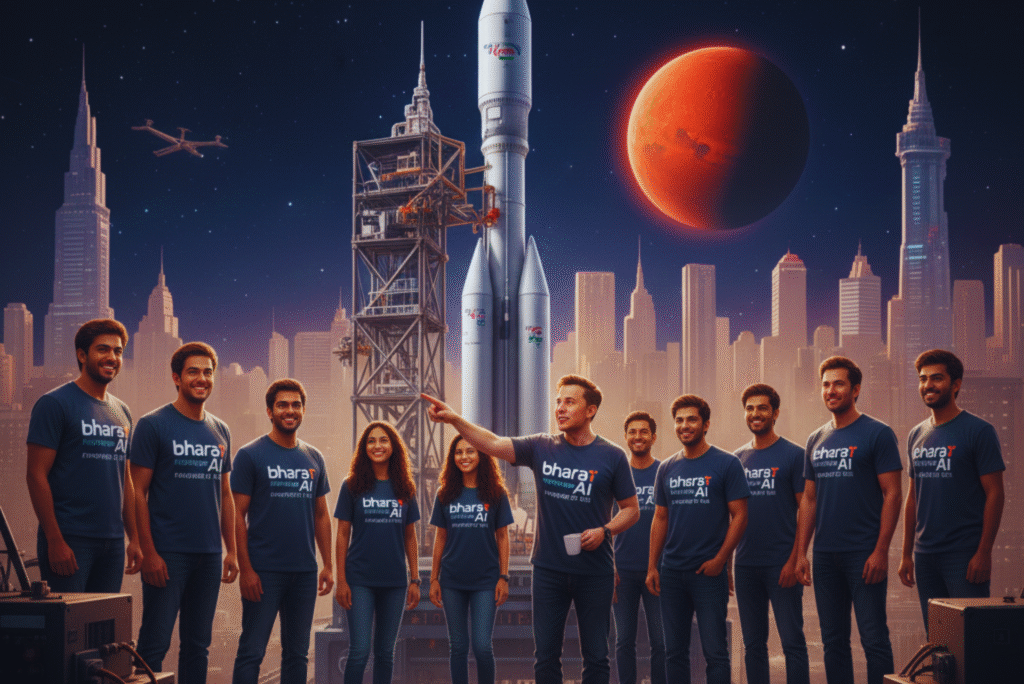
Many aspiring founders in India struggle with doubts such as whether their business will grow, whether the idea already exists, and whether they are taking on too much risk. These fears often stem from unclear thinking and a tendency to copy what others are doing without understanding the deeper mechanics behind a problem. First-principles thinking offers a powerful way out of this cycle. By reducing a problem to its most basic truths and rebuilding a solution from the ground up, entrepreneurs can create offerings that are original, efficient, and far more aligned with customer needs.
First-principles thinking originates from philosophy and physics, where a “first principle” is a fundamental truth that cannot be broken down further. In the business world, Elon Musk helped popularize this concept by arguing that instead of making decisions based on analogy—such as copying competitors or following industry norms—founders should identify the core facts they know are true and use those as the foundation for new solutions. In practical terms, this requires questioning every assumption you hold about costs, customer behaviour, technology constraints, or standard industry practices. When you strip away these assumptions, you are left with a set of basic truths that can guide innovative thinking and lead to solutions that are not obvious from the outside.
Elon Musk’s companies have been built on this mindset. In the rocket industry, for instance, the long-standing belief was that rockets had to cost tens of millions of dollars. Musk refused to accept that assumption. Instead, he examined the raw materials—aluminium, copper, carbon fibre—and calculated what the components should actually cost.
By working backward from physics and material science, he discovered that the true cost was far lower than what the industry had normalized. This insight led him to build SpaceX from scratch, redesigning rockets in-house and dramatically reducing launch costs. A similar approach shaped Tesla’s focus on battery technology and manufacturing efficiency rather than copying existing cars. Musk’s example illustrates how examining the fundamental components of a problem can unlock completely new ways of solving it.
Most people think using analogy. They observe what others are doing in the market and try to replicate it with small modifications. While this approach may lead to incremental improvements, it also keeps entrepreneurs within the same boundaries as their competitors—limited growth, identical margins, and similar customer dissatisfaction.
First-principles thinking, on the other hand, encourages founders to investigate what the customer truly wants, which constraints are genuinely unchangeable, and which “rules” are simply inherited traditions. By uncovering what is actually essential and what is merely habit, founders can escape competitive traps and design completely different solutions.
The first step in applying first-principles thinking is to identify every assumption you hold about your idea. These assumptions might include beliefs such as customers being unwilling to pay above a certain amount, that discounts are the only way to drive acquisition, or that offline presence is mandatory in certain markets. Many entrepreneurs also carry limiting assumptions about their own abilities, such as thinking they must know how to code or that they need significant capital before launching.
The next step is to break your problem down into the essential outcomes your customer is seeking. This means defining the core job they want done—whether that is fast food delivery, simple investment options, or safe and affordable travel. Once you identify the non-negotiable elements required to fulfil this job, such as safety, legality, or reliability, everything else becomes optional and can be reimagined.
Finally, using only these core truths, you rebuild a solution from the ground up. This involves questioning every process and cost to determine whether it is actually necessary or simply a legacy of how things were traditionally done. When you reconstruct your solution in this way, you often arrive at simpler, more cost-effective models that are far more aligned with what customers want.
A large portion of entrepreneurial fear stems from vague thinking. When assumptions go unchallenged, everything seems risky because nothing is clearly understood. First-principles thinking transforms uncertainty into clarity. Instead of asking broad, fear-driven questions like “Will my business grow?”, founders begin asking specific, grounded questions such as “What truths about my market guarantee that growth is possible if I execute well?” This shift provides a clear direction for experimentation, reduces emotional decision-making, and helps founders focus their energy on what actually matters.
Zerodha is one of the clearest examples of first-principles thinking applied in India. Traditional stock brokers charged percentage-based fees on trades, operated expensive physical branches, and maintained complicated pricing models. Instead of accepting this as the norm, Zerodha’s founders asked a more fundamental question: what is the real purpose of a broker? Their answer was simple—provide a safe, fast, and compliant platform for executing trades.
Once the system became fully digital, they realized that the cost of processing a trade was nearly the same regardless of the transaction value. This made percentage-based fees unnecessary and opened the door for a flat-fee structure. Zerodha’s transparent ₹20-per-trade model emerged directly from this first-principles insight and completely reshaped the Indian brokerage landscape.
Before Swiggy, many people believed that food delivery in India was inherently unreliable due to traffic, coordination issues, and fragmented supply chains. Early startups tried to solve the problem by expanding quickly, offering multiple services, or outsourcing logistics, which only added complexity. Swiggy approached the issue differently. The founders focused on a single essential question: how can food be delivered reliably from nearby restaurants to customers in the shortest time? They launched in one Bengaluru neighbourhood and concentrated exclusively on delivery speed and reliability. Instead of relying on third-party logistics, they built their own delivery fleet, even though it appeared more expensive at first.
Their first-principles insight was that Indian consumers would reorder frequently if the service was consistent and convenient. This conviction helped Swiggy scale nationally while maintaining operational excellence.
Although Amazon is not an Indian company, its first-principles approach has profoundly shaped Indian e-commerce. Physical bookstores traditionally believed they could stock only popular titles because shelf space was limited. Amazon reframed the problem by recognizing that the true value lay in offering customers access to any book they wanted, not just bestsellers. Since the internet removed physical constraints, they could provide an enormous catalogue without maintaining physical shelves. Indian e-commerce platforms adopted similar thinking across categories like books, fashion, and grocery, demonstrating how constraints that seem real in offline businesses may disappear in digital environments.
To put first-principles thinking into action, founders should begin by defining their core problem in a single sentence. For example, someone building an education product might say, “I want to help students in Tier-2 cities become interview-ready for data science roles through affordable online cohorts.” Once the problem is clear, the founder should list all the assumptions they currently believe about the market, product, and customer behaviour. Many of these assumptions will turn out to be guesses rather than truths.
The next step is to identify which of these elements are non-negotiable. These might include the need for social proof to build trust, the requirement for bandwidth-friendly content, or legal compliance for issuing certificates and handling payments. Everything else—including pricing models, platform choices, or course formats—is flexible and can be redesigned.
After this, the founder should rebuild a simple version of the solution using only these essential truths. This might mean delivering the course through WhatsApp and Zoom instead of developing an app, pricing higher than competitors if the outcomes justify it, or starting with a small cohort to improve quality. Once this basic model is ready, it should be tested through tiny real-world experiments with a small group of paying users. The goal is not perfection but learning whether the core assumptions hold true.
Fear thrives in uncertainty. When founders don’t know what truly matters, everything feels like a potential risk. First-principles thinking replaces this fuzziness with clarity. By identifying what is essential, what is optional, and what can be redesigned, entrepreneurs develop a clear roadmap that guides their decisions. Instead of aspiring to be the next Elon Musk, founders begin asking whether they can understand one specific problem for one specific set of customers better than almost anyone else. If the answer is yes—and if they validate their insights through small, consistent experiments—they are already on the path that exceptional founders follow.

We are a knowledge-driven platform focused on delivering reliable insights related to business, finance, and economic trends. Our goal is to simplify complex topics and present them in a clear, practical, and easy-to-understand manner for our readers.
© 2026 Pivisun. All Rights Reserved. Developed by Digital Hawk Group.