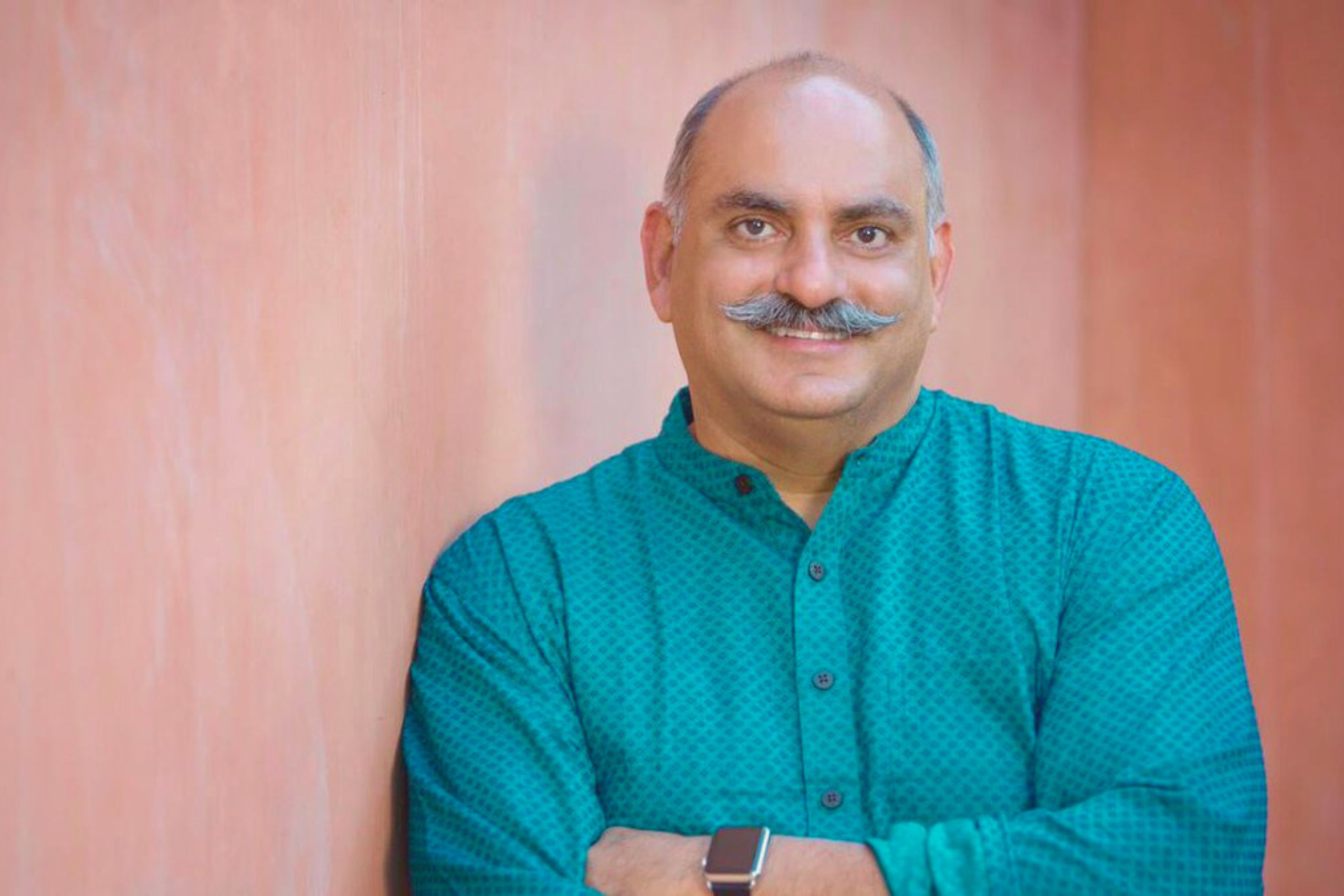
In the late 1990s, a young IT entrepreneur named Mohnish Pabrai stumbled upon the life of Warren Buffett. He didn’t just read about him; he decided to “clone” him. Today, Pabrai is a legend in the value investing community, known for turning a small pool of capital into a global powerhouse. But for the Indian investor, Pabrai’s journey is more than just a success story-it is a masterclass in how to look at a business without the blinkers of “sector labels.”
On Dalal Street, we are obsessed with categorizing. We talk about “defensive” IT stocks, “risky” small caps, or “boring” PSUs. But if you listen to Pabrai, he’ll tell you that these categories are largely an illusion. To him, the only thing that matters is the “nature of the business” and the “cash in versus cash out.”
Whether he is buying a high-growth tech firm or a coal mine in a dying industry, the internal math remains the same. This article explores how Pabrai bridges the gap between deep-value cyclicals and long-term compounders, and how you can apply these “Dhandho” principles to the Indian market.
The Myth of the “Cyclical” vs. the “Compounder”
Most investors believe that a “compounder” is a company like Asian Paints or HDFC Bank-businesses that grow steadily every year. Conversely, they label commodity businesses like steel or coal as “cyclicals” to be traded, not owned.
Pabrai argues this is a myopic view. He famously points to Saudi Aramco as the ultimate example. While the world calls it a cyclical oil company, Pabrai sees it as a “super-compounder.” Why? Because their cost to produce a barrel of oil is roughly $12, while the selling price is significantly higher.
“It’s hard to imagine a situation where you’re losing money with a $12 cost base,” Pabrai notes. “It has generated more cash than any business on the planet.”
In the Indian context, think of a company like Coal India. It is often dismissed as a slow-moving PSU in a “cyclical” industry. But if you look at it through Pabrai’s lens, it sits at the bottom of the cost curve with massive reserves. If you buy it when the “cash-out” (the dividends and earnings) far exceeds the “cash-in” (the price you pay), the label of “cyclical” becomes irrelevant. It is simply a mispriced cash machine.
High Uncertainty vs. High Risk: The Sunteck Realty Story
One of the most profound lessons from Pabrai’s “Dhandho” framework is the distinction between Uncertainty and Risk. The stock market hates uncertainty, and it usually reacts by crashing the stock price. This is exactly where Pabrai goes hunting.
Consider his investment in Sunteck Realty around 2016-2017. At the time, the Indian real estate sector was hit by a triple whammy: Demonetization, RERA, and GST.
• The Uncertainty: Would people ever buy luxury flats in Mumbai again? When would the regulations settle down?
• The Risk: Was the company going to go bankrupt? No. Sunteck had premium land parcels in BKC (Mumbai) acquired at extremely low costs and a strong balance sheet.
The market saw “high risk” and dumped the stock. Pabrai saw “high uncertainty but low risk.” He realized that even if it took three years for the market to recover, the value of the land wasn’t going to zero. He bought nearly 10% of the company at a fraction of its intrinsic value. As the “uncertainty” cleared, the stock price caught up with the value, leading to massive gains.
Lesson for you: When an Indian sector (like Pharma during USFDA crackdowns or Chemicals during a global slowdown) is in the news for the “wrong” reasons, don’t ask if it’s risky. Ask if it’s just uncertain. If the business is simple and the balance sheet is strong, uncertainty is your best friend.
Finding “Cannibals” in the Indian Market
Pabrai has a specific love for “Cannibals”-companies that use their massive free cash flow to buy back their own shares. This is a critical bridge between a cyclical business and a compounder.
Take his current interest in metallurgical coal companies like Alpha Metallurgical Resources (AMR) and Warrior Met Coal. These are classic cyclicals, but they are behaving like compounders because they are retiring their own shares at a rapid pace.
How this works in India:
Imagine an Indian company-let’s call it “ABC Steel”-that is earning ₹1,000 Crore in profit. The market hates steel right now, so the company’s market cap is only ₹4,000 Crore (a P/E of 4). Instead of building a new factory, the management uses that ₹1,000 Crore to buy back 25% of the shares.
• Next year, even if the profit stays exactly the same (₹1,000 Crore), your “earnings per share” has just jumped by 33% because there are fewer shares.
• Over 5 years, if the company keeps doing this, the original shareholders end up owning a much larger piece of the pie.
Pabrai looks for these “Cannibals” because they create wealth even when the industry isn’t growing. In India, look for companies that have stopped “over-investing” in new plants and have started returning cash to shareholders through buybacks and dividends.
The “Floor Price” Strategy: Rain Industries
Pabrai’s investment in Rain Industries (a producer of Calcined Petroleum Coke) is a classic example of looking for the “floor.” Rain is a global player, and its fortunes are linked to the aluminum industry.
When Pabrai invested, the stock was beaten down because aluminum prices were low. However, he looked at the “Nature of the Business”:
1. Niche Dominance: Rain is one of the few global players in its space.
2. Cash Flow Floor: He calculated that even in a bad year, the company would generate enough cash to service its debt and keep the lights on.
3. Low Entry Price: He bought in at a P/E of roughly 1 or 2 based on “normalized” earnings.
By buying near the “floor price,” he ensured that even if he was wrong about the timing of the cycle, he wouldn’t lose much. When the cycle eventually turned, the stock went from around ₹30 to over ₹400. That is the power of buying “cyclicals” when they are priced for death.
The 150-Item Checklist: Avoiding the “Value Trap”
You might wonder: “If it’s so easy to buy cyclicals at a low price, why doesn’t everyone do it?” The reason is Value Traps. Many Indian companies look cheap but are actually “trash” because of poor management or high debt.
To combat this, Pabrai uses a rigorous checklist (inspired by pilots and surgeons). He doesn’t just look for “cheap”; he looks for:
• Integrity of Management: Is the “Jockey” honest? In India, corporate governance is the #1 reason for capital loss.
• Debt Levels: A cyclical company with high debt is a “High Risk” bet. A cyclical company with zero debt is a “Low Risk” bet.
• The “Moat”: Does the company have a cost advantage? (e.g., Is their factory closer to the raw material than their competitors?).
Before you invest in that “cheap” PSU or metal stock, ask yourself: If the commodity price drops another 20%, does this company have the cash to survive for two years? If the answer is no, it’s not a Dhandho bet; it’s a gamble.
How to Build Your “Pabrai-Style” Portfolio in India
If you want to allocate capital like Mohnish, you have to stop thinking about “diversification” in the traditional sense. Pabrai doesn’t believe in owning 50 stocks. He believes in “Few bets, Big bets, Infrequent bets.”
1. Wait for the Fat Pitch: Most of the time, the Indian market is fairly priced. You might have to wait 2 years to find one “PE of 1” opportunity.
2. Concentrate Your Conviction: When you find a Sunteck or a Rain Industries-where the downside is protected and the upside is 5x-don’t just buy a 1% position. Pabrai often puts 10% or more of his fund into a single idea.
3. Look for “Spawners”: He recently began focusing on “Spawners”-companies that have a DNA of starting new businesses (e.g., Reliance Industries spawning Jio and Retail, or Bajaj Finserv spawning multiple insurance and lending arms). These are the ultimate
Final compounders because they keep finding new ways to deploy capital.
Thoughts: “Where Do I Sign?”
The secret to Mohnish Pabrai’s success isn’t a complex algorithm. It is the ability to look at a business and say, “I am buying a stream of future cash flows.”
If a shipping company is selling for 2x its annual profit because people think “shipping is dead,” Pabrai doesn’t see a “dead sector.” He sees a business that will pay for itself in 24 months. After that, everything else is a bonus.
As an Indian investor, the next time you see a sector in crisis-whether it’s Chemicals, Textiles, or Banking-don’t join the crowd in running away. Open the balance sheet, look for the “Cannibals” and the “Low-Cost Producers,” and ask yourself: If I buy this whole company today, how many years of cash flow will it take to get my money back?
If that number is low, and the business is simple, you’ve found your Dhandho bet.