
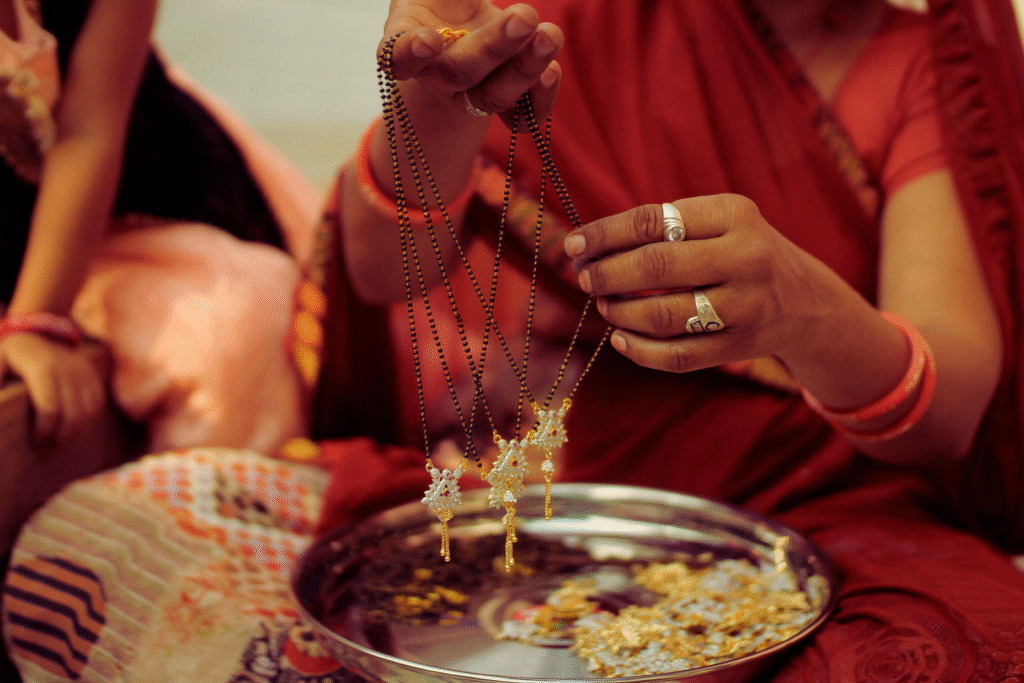
India’s relationship with jewelry is older than most civilizations. We don’t just buy jewelry — we store wealth in it, celebrate with it, pass it down generations, and increasingly wear it as an everyday expression of identity. That’s why, after food and groceries, jewelry is India’s second-largest consumption category, bigger than even apparel.
For entrepreneurs, this presents one of the most exciting and under-tapped opportunities in the consumer market today. And few modern brands illustrate this opportunity better than Bluestone, a company that quietly reinvented itself over a decade and is now approaching a billion-dollar valuation.
In this article, we break down:
How the Indian jewelry market actually works
Why it is still underpenetrated
What new-age brands like Bluestone did right (and wrong)
How you can identify gaps and build a scalable, modern jewelry business
This is a strategic guide — written for founders, operators, and anyone curious about India’s evolving consumer landscape.
A massive category with stable, cultural demand
Jewelry is a ₹5–6 lakh crore industry. It is not dependent on Western fashion cycles or fleeting trends. Birthdays, weddings, festivals, promotions — the occasions keep coming. This makes demand relatively resilient, even in slower economies.
Still dominated by unorganized retail
Despite brands like Tanishq, Kalyan, and Malabar growing aggressively, a large share of jewelry purchases still happen at local, single-store family jewelers.
This creates an unusual situation:
Huge category
But weak brand penetration
And customers increasingly open to organized, trustworthy alternatives
This is exactly the kind of environment where new brands can grow fast.
Changing consumer behavior
A major shift is happening:
Younger customers buy more design-first jewelry
They treat jewelry as self-expression, not just an investment
They mix gold with diamonds, solitaires, lab-grown stones, and even everyday fine jewelry
This shift gave rise to brands like CaratLane and Bluestone.
Bluestone started in 2014 as a pure online jewelry brand. Back then, the assumption was:
“If people can buy phones and TVs online, they’ll buy jewelry too.”
But the reality was very different.
From Online-Only to Omni-Channel
Customers loved browsing online, but hesitated to pay ₹50,000 to ₹1,00,000 without touching or trying the product.
Bluestone learned this the hard way. Online-only didn’t scale.
So the company made its most important strategic pivot:
Online for discovery
Offline for trust + conversion
And it worked.
This same pattern repeated across India:
Lenskart
FirstCry
Pepperfry
CaratLane
Online-first → Omni-channel → Scale.
The Indian consumer journey is simple:
“I want to discover online, but I want to feel before I buy.”
Traditional jewelers like Kalyan build for a customer who sees gold as a store of value. Their jewelry is often heavy, traditional, and investment-led.
Bluestone targeted a completely different consumer:
Young professionals
Women buying jewelry for themselves
Urban couples buying contemporary engagement rings
Customers looking for design, not resale value
This is why Bluestone naturally became diamond-heavy, not gold-heavy.
Diamonds and precious stones also offer far higher gross margins, which gives the brand more breathing room to invest in design, marketing, and experience.
Bluestone also benefited from the rise of lab-grown diamonds — a category that lets customers buy a 1-carat “rock” for 1/8th the price.
People still buy natural diamonds for emotional or investment reasons, but lab-grown unlocked new aspirational customers.
For many young Indians:
“Why buy a tiny natural stone when I can buy a big lab-grown stone at the same price?”
Bluestone positioned itself perfectly for this shift.
Based on market data and Bluestone’s journey, here are the strategic steps for building a jewelry brand in India today.
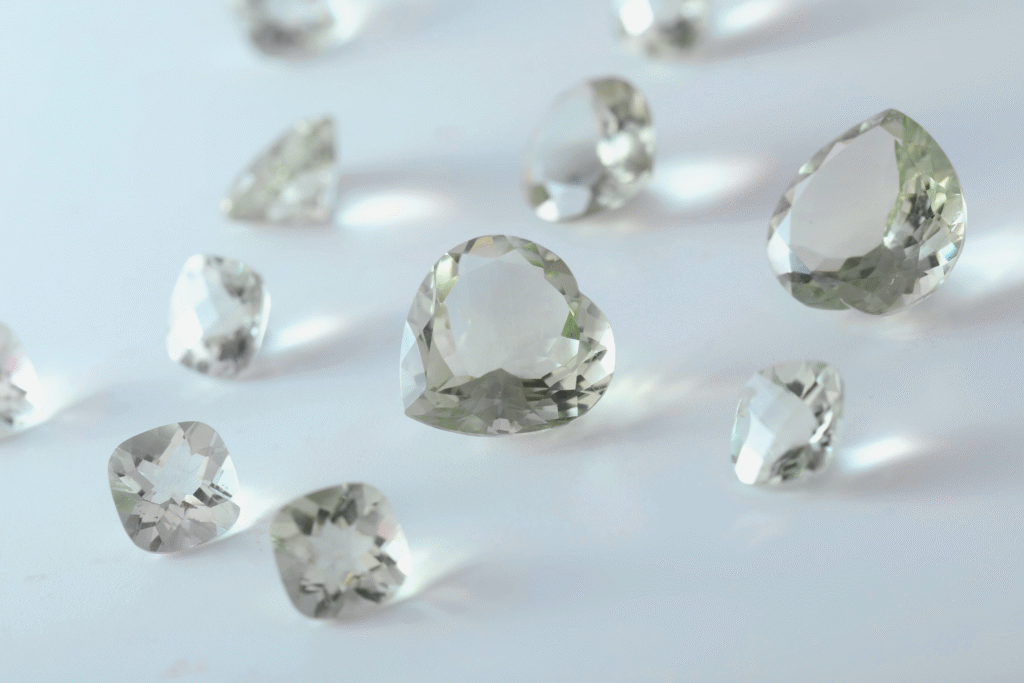
Before designing products or raising capital, decide your identity:
Option A: Gold-as-investment (traditional segment)
Lower gross margins
Extremely competitive
High trust requirement
Harder for new brands
Big players dominate (Tanishq, Kalyan, Malabar)
Option B: Design-first diamond & gold jewelry (modern segment)
Higher margins
Younger audience
More frequent purchases
Strong brand differentiation
Option C: Lab-Grown Diamonds (emerging segment)
Attractive price–value equation
High curiosity, low trust (content + education needed)
Very fast-growing among urban buyers
Most new brands succeed in B and C, not A
No jewelry brand can scale purely online in India.
But every jewelry brand must use online for discovery.
Phase 1 → Online-first
Launch with 50–150 SKUs
Digitally-led storytelling
Instagram + Pinterest content
Virtual try-ons (AR helps discovery)
Phase 2 → Experience centers
Once you see traction in certain pin codes:
Set up small 300–500 sq ft micro-stores
Focus on trial + trust
Keep inventory lean (display + made-to-order)
Use stores as marketing hubs
The goal is not to build a chain of massive showrooms.
It is to build efficient conversion centers.
Jewelry businesses die not because demand is low but because capital is stuck in inventory.
Track these three metrics obsessively:
Inventory Turnover
Target ≥ 2×
Bluestone, at its peak, reached ~2.7×, which is excellent.
Sales Per Square Foot
This is the single most important metric for store profitability.
Same Store Sales Growth (SSSG)
If SSSG is rising, your brand is compounding.
Bluestone had 30–50% SSSG in growth phases — a rare and strong sign.
A jewelry brand lives or dies on trust.
Your brand must offer:
Certification (always)
Transparent pricing
Clear return/upgrade policy
Strong online reviews
Assured buyback
The simpler your promise, the faster you grow.
Jewelry buyers Google everything:
“Are lab-grown diamonds real?”
“How to check diamond purity?”
“Is 14K gold better for daily wear?”
“Difference between solitaire and diamond rings”
If your brand answers these questions better than anyone else, customers trust you — and trust translates into sales.
This is how CaratLane built authority online
Do not open 10 stores at once.
Do not enter too many cities too early.
Grow like this:
Build one profitable store
Clone it in the same city
Move to a second city
Expand only when SSSG stabilizes
Failure in jewelry often comes from expanding before stores mature.
A bold pivot can save your company
Bluestone would not exist today if it remained online-only.
Choose the right consumer, not the biggest market – Traditional gold buyers were not Bluestone’s customer.
Urban design-led buyers were.
High margins allow creativity – By focusing on diamonds and design, Bluestone bought itself room to experiment with marketing and experience.
Brand compounding is slow but powerful – Bluestone’s advertising spend is still higher than Titan’s, but will reduce as brand trust deepens.
Founders must have long-term conviction – Bluestone’s founder even took a loan to increase ownership before the IPO — a rare sign of belief in the business.
Over the next 10–15 years, three waves will shape the industry:
Wave 1 — Brand penetration increases – More customers shift from local jewelers to trusted brands.
Wave 2 — Lab-grown mainstream adoption – Especially in engagement, gifting, and everyday wear.
Wave 3 — Omni-channel becomes the norm – Every major jewelry brand will be:
Social media led
Content heavy
Data-driven
Omni-channel
Experience-centered
The market is massive, trust-driven, and still under-branded — this combination almost never appears in consumer categories
Absolutely — if you are strategic.
The market is big enough for dozens of new brands.
But the winners will be those who:
Choose the right segment
Build trust systematically
Use online discovery + offline experience
Manage inventory like a hawk
Focus on brand differentiation
Scale stores only after hitting maturity
Bluestone shows us that the Indian jewelry consumer is evolving — and brands that understand this evolution will grow faster than ever before.

We are a knowledge-driven platform focused on delivering reliable insights related to business, finance, and economic trends. Our goal is to simplify complex topics and present them in a clear, practical, and easy-to-understand manner for our readers.
© 2026 Pivisun. All Rights Reserved. Developed by Digital Hawk Group.